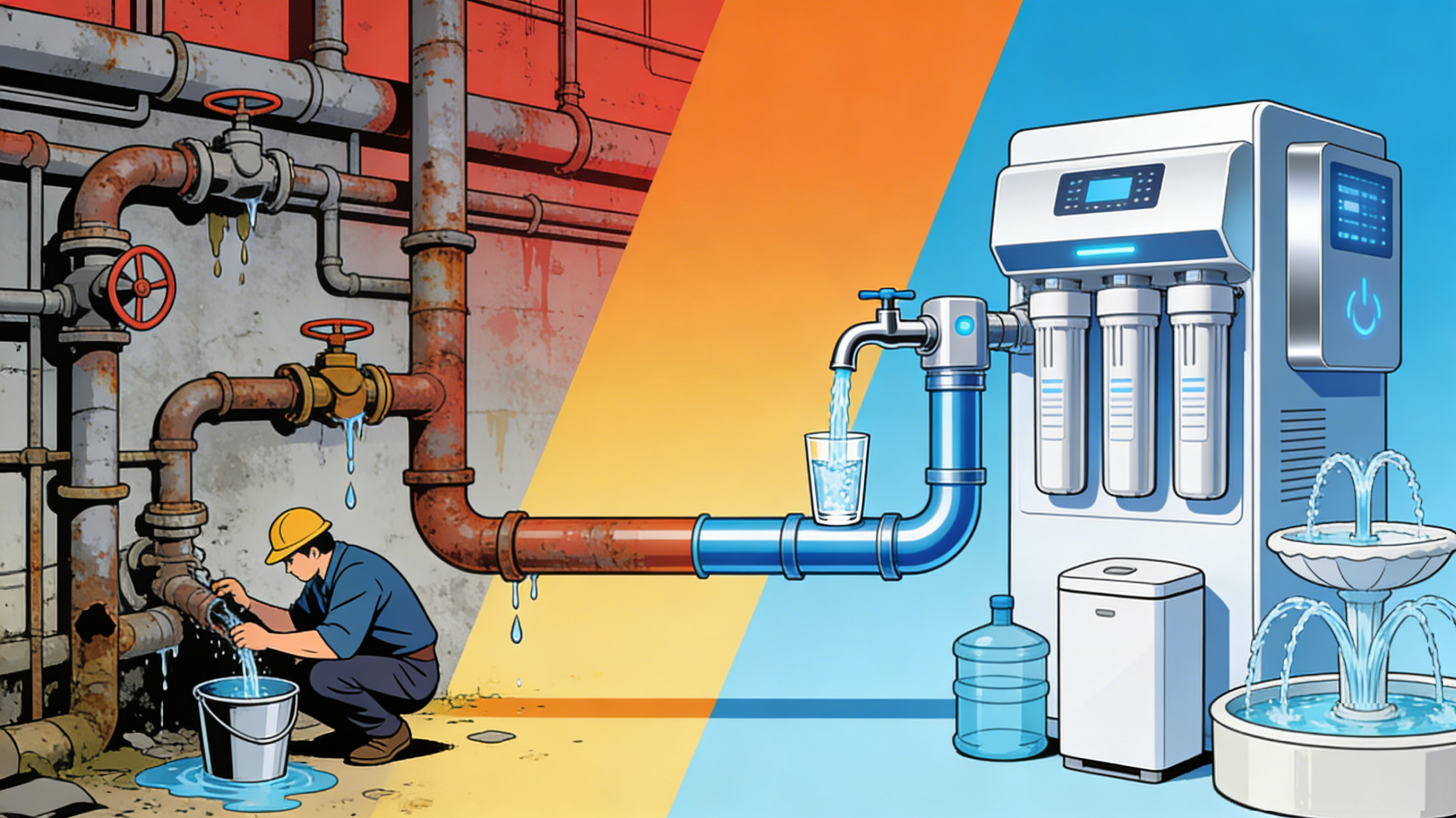
You probably didn’t set out to build a brittle data architecture—but somewhere along the way, your team ended up maintaining dozens of pipelines, each written for a specific use case, each slightly out of sync, and none truly “real-time.” This is the legacy of traditional ETL: a patchwork of batch jobs, fragile joins, and delayed insights.
Now, organizations are shifting from ETL pipelines to Data as a Service (DaaS)—a model that favors always-fresh data, reusable delivery layers, and governed APIs. But this isn’t just a tooling change—it’s an architectural shift. In this post, we’ll walk through what it takes to move from ETL to DaaS, what pitfalls to avoid, and how platforms like TapData make the transition manageable.
Why ETL Breaks at Scale
ETL (Extract, Transform, Load) has been the backbone of data integration for decades. But it wasn’t designed for the modern world of operational analytics, real-time personalization, or API-first ecosystems. Common failure points include:
-
Latency: ETL jobs often run hourly or nightly, making downstream decisions stale.
-
Coupling: Each consumer tends to get a custom pipeline, leading to duplication and inconsistent logic.
-
Rigidity: Schema changes upstream can easily break ETL jobs.
-
Cost: Rebuilding entire datasets on every run is expensive and wasteful.
In short, traditional ETL works well for static reporting, but struggles with dynamic, user-facing, or automated data consumers.
What Changes with DaaS
Data as a Service (DaaS) replaces ad-hoc pipelines with a consistent service layer. Instead of pushing data into every destination, you serve data on demand via APIs or materialized views—complete with freshness SLAs, governance, and observability.
Key changes include:
-
Pull-based access: Consumers request data when needed, rather than waiting for batch loads.
-
Semantic consistency: One modeled view supports many use cases, reducing logic drift.
-
Live freshness: Changes flow continuously via CDC, with no need to reprocess entire tables.
-
Operational readiness: SLAs, lineage, access control, and audit logs are built into the data delivery layer.
DaaS doesn’t eliminate the need for historical pipelines or batch storage—but it repositions them. You keep the warehouse; you stop using it as a real-time system.
ETL → DaaS: A Phased Migration Strategy
You don’t need to rip out every ETL pipeline to adopt DaaS. Here’s a phased approach that has worked for many TapData users:
-
Identify critical use cases where latency matters
Start where stale data hurts most—customer views, order tracking, fraud detection, etc.
-
Configure CDC from your operational systems
TapData connects to your transactional databases using log-based CDC, without performance hits.
-
Model once, publish many
Define core entities (e.g., Customer, Product, Transaction) with clean joins, filters, and business logic—then expose them via materialized views or APIs.
-
Route consumers to DaaS endpoints
Instead of waiting for ETL jobs to populate downstream systems, have dashboards, services, or partners consume directly from TapData’s DaaS layer.
-
Decommission legacy pipelines gradually
Once consumers stabilize on the DaaS endpoints and SLAs are met, you can retire the corresponding ETL jobs and reduce operational complexity.
Why TapData for ETL-to-DaaS Migration
TapData provides the full stack required to modernize legacy pipelines:
-
Native CDC ingestion from major OLTP systems
-
Low-code modeling for reusable semantic layers
-
Materialized views & API publishing in the same platform
-
Incremental updates to avoid full reprocessing
-
Governance tools including RBAC, field masking, and auditing
-
Built-in observability to track freshness, usage, and failure points
Whether you’re dealing with five pipelines or fifty, TapData gives you a structured way to transition from pipeline sprawl to a governed, reusable DaaS platform.
Before and After: ETL vs. DaaS
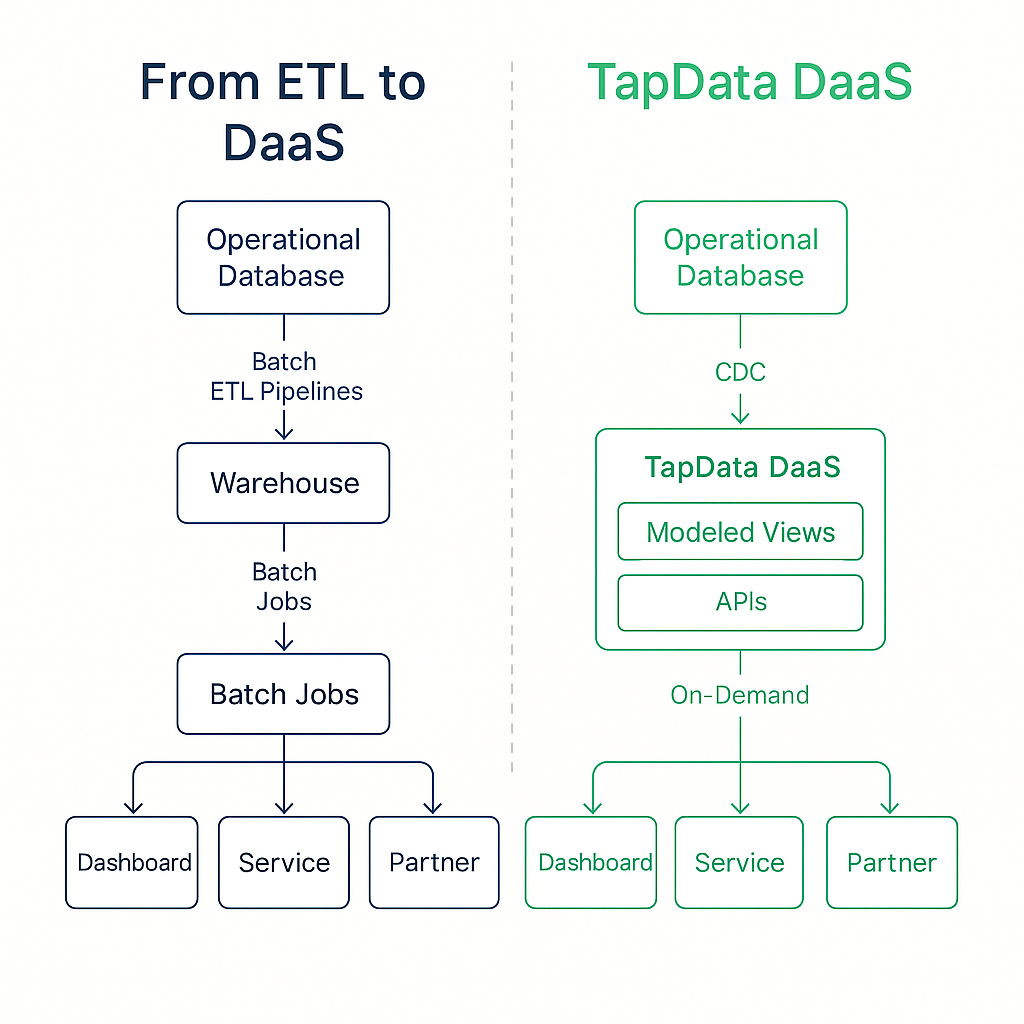
| Capability | Traditional ETL | TapData DaaS |
| Delivery method | Push-based pipelines | On-demand APIs / views |
| Freshness | Hourly / daily | Seconds to minutes |
| Consumer reuse | Custom per use case | One model, many outputs |
| Schema evolution | Manual patching | Tolerant + versioned contracts |
| Governance | External or missing | Built-in RBAC, masking, audit |
| Failure handling | Retry scripts, manual | Streaming-aware recovery and replays |
Conclusion
You don’t need to abandon ETL completely—but you can stop treating it as the solution to every integration problem. DaaS offers a more scalable, real-time, and governed way to deliver data to the people and systems that need it most.
Platforms like TapData help you make that shift incrementally, with built-in support for CDC, modeling, view publishing, and governance—all without building a new pipeline for every new request.
>>> Learn more in our Complete Guide to DaaS
>>> Ready to migrate from legacy ETL? Book a live demo
Related Blogs: